CAPACITIVE
A grid of tiny capacitors
In a mutual capacitance screen, rows and columns of transparent conductors cross. A finger near a crossing reduces the capacitance there, and the controller works out where you are.
Try the touch check doodleiphone
FROM RADAR LAB TO PHONE
A touchscreen does not feel pressure. Most of them feel you.
What will it sense?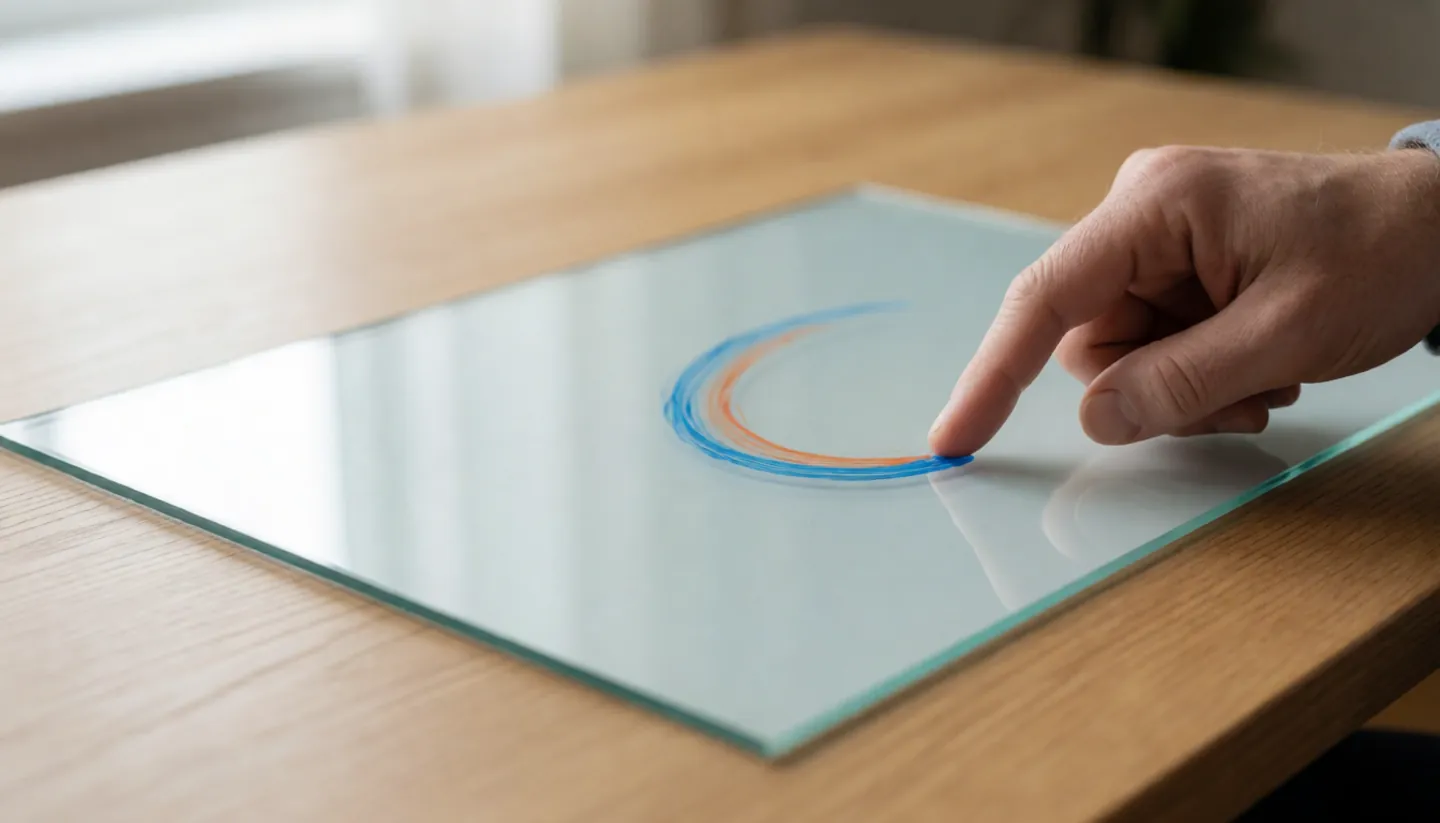
TOUCHis electrical
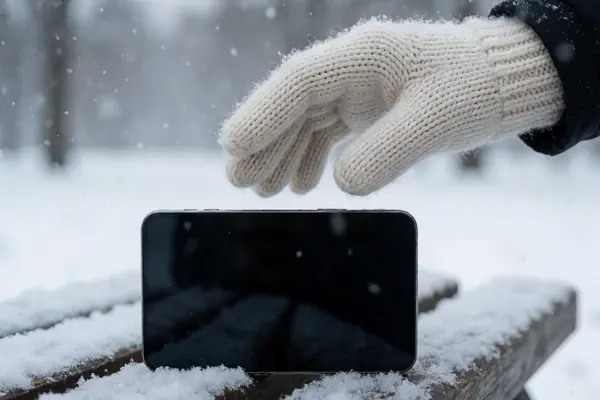
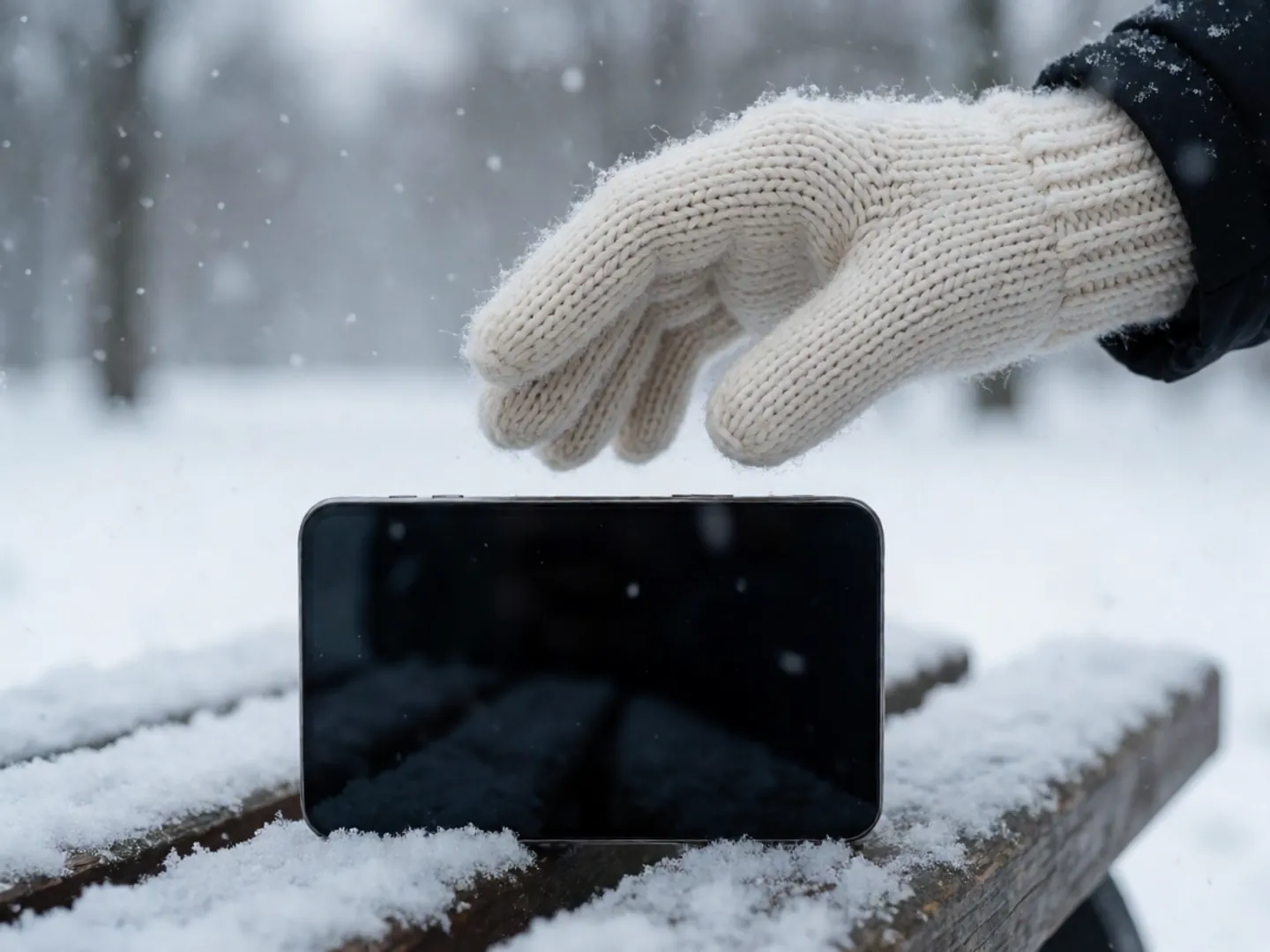
The screens on most phones and tablets are capacitive: a fingertip conducts electricity, and the glass can sense the tiny change it makes to an electric field. That is why a pen lid does nothing and a thick glove often fails.
At a glance
1965
First finger-driven touchscreen
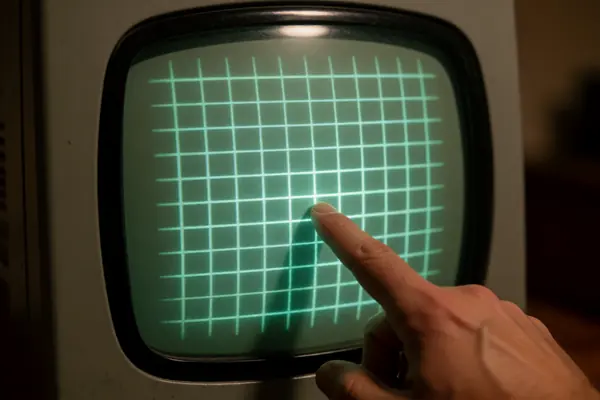
E.A. Johnson of the Royal Radar Establishment in Malvern described a capacitive touch display in Electronics Letters in 1965, and more fully in 1967. It was adopted by UK air traffic controllers.
FIRST DESCRIBED · MALVERN
20+ years
Working life of the first CERN screens
CERN engineer Bent Stumpe built capacitive touch screens for the SPS control room consoles in 1973. He said they stayed in operation for more than 20 years.
CERN · SPS CONTROL ROOM
TWO NUMBERS WORTH KNOWING
One date for where it began,
one figure for how long early screens worked.
Ars Technica reports that Johnson's touch interface stayed in use with UK air traffic controllers until the late 1990s.
A QUICK TOUCH CHECK
Pick something to press on a typical capacitive screen. The bar shows how likely it is to be sensed.
General behaviour of capacitive touchscreens; individual screens and settings vary.
THE SHORT ANSWER
Two main kinds of screen,
two very different ways to find your finger.
CAPACITIVE
In a mutual capacitance screen, rows and columns of transparent conductors cross. A finger near a crossing reduces the capacitance there, and the controller works out where you are.
Try the touch checkGLOVES
A capacitive screen needs something that conducts. Some cannot sense a finger through gloves; special gloves stitch conductive thread into the fingertip.
Ways round itHISTORY
The first finger-driven touchscreen is credited to E.A. Johnson at the Royal Radar Establishment in Malvern, described in 1965. CERN built its own for a control room in the 1970s.
See the history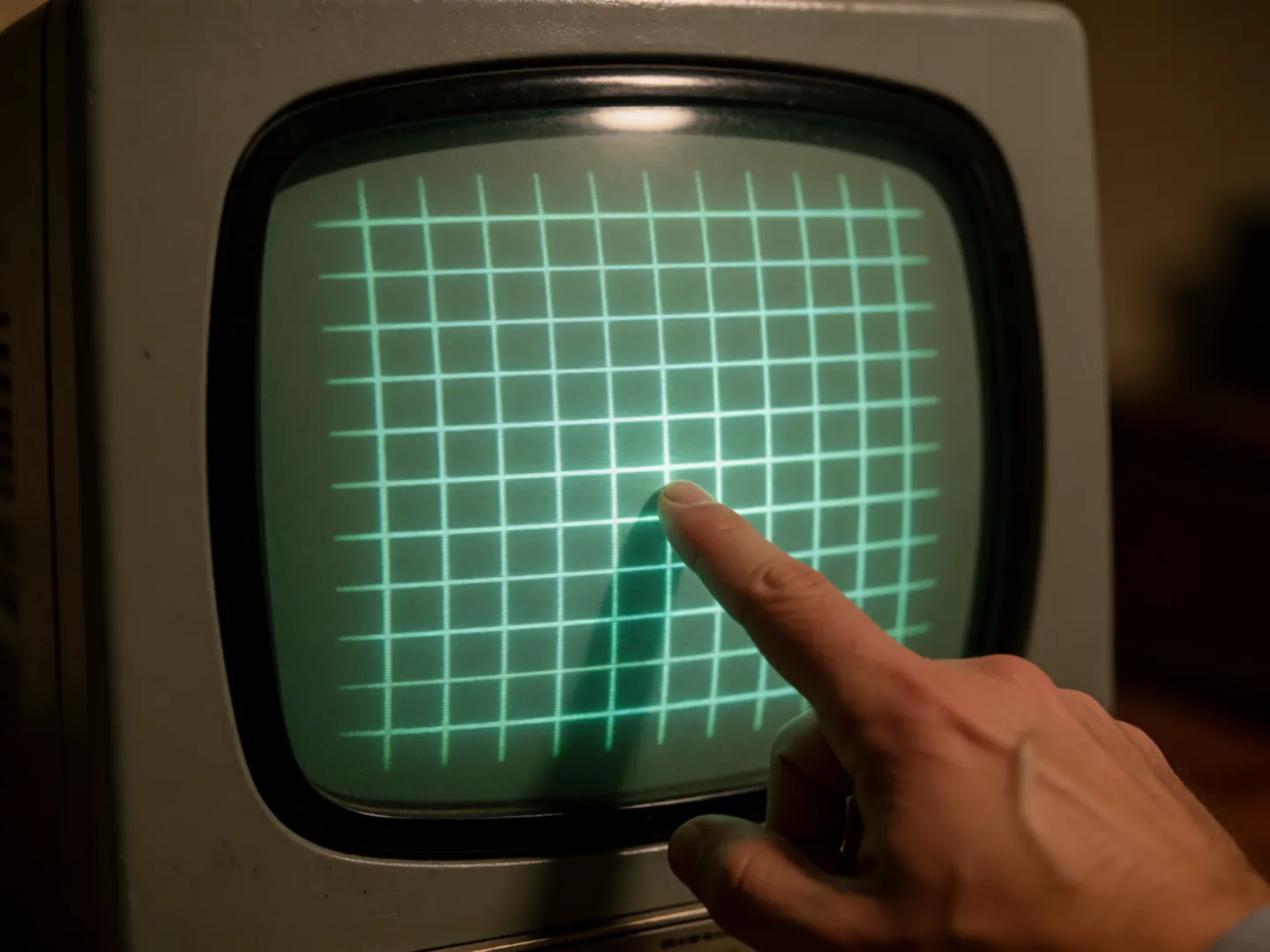
FOUR THINGS TO TRY
These follow from how capacitive sensing works. They are general tips, not instructions for any particular device.
Water and sweaty fingertips can confuse a capacitive screen, so a quick wipe often fixes missed taps.
Gloves with conductive thread sewn into the fingertip let the screen sense your finger through the fabric.
A plain plastic stylus will not register. One with a conductive shaft and soft conductive tip will.
Older or rugged devices may use resistive screens that respond to pressure, so a fingernail or any stylus works.
RESISTIVE SCREENS
A resistive touchscreen has two thin conductive layers separated by a small gap. Press down and they touch at that point, and the controller measures where. Anything rigid works: a fingernail, a gloved finger or any stylus.
Ars Technica traces the idea to G. Samuel Hurst, who used conductive paper to read x and y coordinates and later founded Elographics. Resistive screens are cheap and tolerate liquids, which is why they turn up in restaurants, factories and hospitals.
QUESTIONS PEOPLE ASK
Most phone and tablet screens are capacitive and need a conductor such as a finger. Some cannot sense a finger through insulating material like gloves. Special gloves with conductive thread in the fingertip get round this.
The first finger-driven touchscreen is generally credited to E.A. Johnson of the Royal Radar Establishment in Malvern, England, who described his capacitive design in 1965 and more fully in 1967.
CERN engineers Bent Stumpe and Frank Beck built transparent capacitive touch screens for the SPS accelerator control room in the 1970s. Stumpe said they stayed in use for more than 20 years.
A capacitive screen senses the change a conductor makes to an electric field. A resistive screen senses pressure, when two thin layers are pushed together, so it works with any stylus or a gloved finger.
Water conducts, and capacitive screens look for changes in the electric field. Some can fail to sense correctly with even a small amount of water on the screen.
Ars Technica points to the University of Illinois's PLATO IV terminal, one of the first general computer-assisted instruction systems. It used infrared rather than capacitive or resistive touch, and was the first touchscreen computer used in a classroom that let students touch the screen to answer questions.
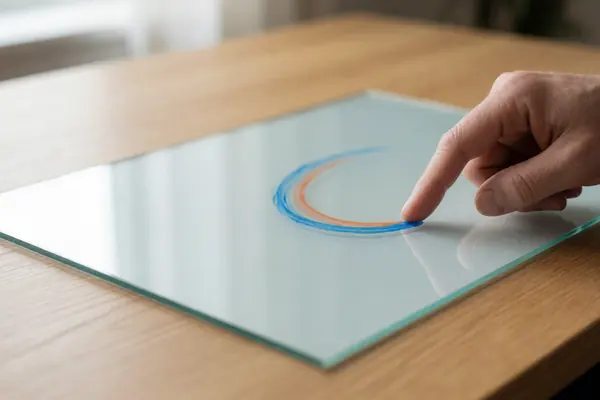
In 1982, according to Ars Technica, Nimish Mehta at the University of Toronto developed the first human-controlled multitouch device. It was more a touch tablet than a screen: a frosted-glass panel with a camera behind it that recognised the dark spots fingers made on the glass. Johnson's 1960s screen could only register one touch at a time.
Sources
ABOUT THIS NAME
doodleiphone.com is part of the DoodleSale portfolio. It isn't in an auction right now, but you can ask about leasing it.